
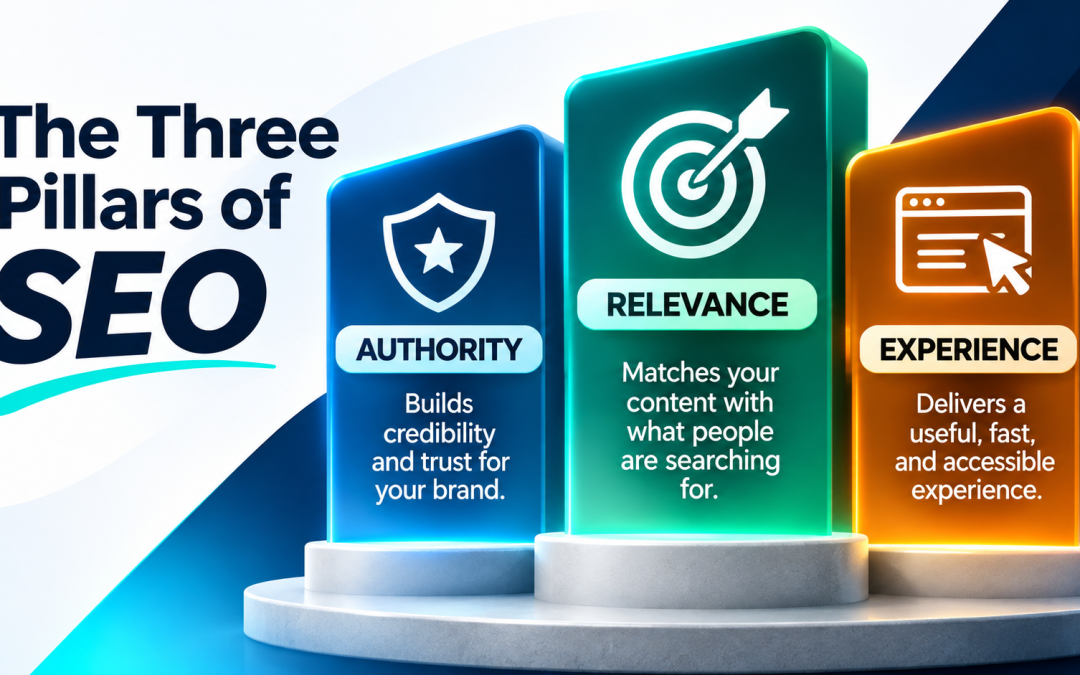
What are the three pillars of SEO?
The three foundational pillars of SEO are authority, relevance, and experience. Authority reflects a brand’s credibility and recognition, relevance shows how closely its content matches a searcher’s need, and experience describes how useful and accessible the interaction is. Brands serving customers in Australia can reinforce all three through their websites, clear answers, accurate profiles, educational content, and consistent public information.
How Does Authority Support SEO in Australia?
Authority is about whether a brand’s presence gives people a sound reason to trust its information. A business can make its knowledge easier to assess by explaining what it does, publishing useful answers, and presenting accurate information about its services.
For a brand serving customers in Australia, consistency matters across the places where people discover it. Someone may first encounter an educational video, then read a website page or view a public profile. Those sources should present a recognisably account of the same business and its expertise.
Authority is more meaningful when it is supported by substance. Calling a company experienced tells readers little on its own. An explanation that addresses a customer’s question carefully can show how the business understands the subject. Clear, consistent public information helps customers place that answer in context.
What Does Relevance Mean for SEO Content?
Relevance is the fit between a search and the information a page provides. A relevant page identifies the question and answers it without making readers work through unrelated material first.
Consider someone asking, “What are the three pillars of SEO?” The useful starting point is a direct explanation of authority, relevance, and experience. Details about each pillar can follow. A general description of digital marketing would serve a different purpose and might leave the original question unresolved.
Headings can help a reader see what each section covers, while the text beneath them supplies the answer. Relevant content also reflects the level of detail a searcher needs. A short definition can establish the main idea; examples and related questions can then make it easier to apply.
For businesses serving Australia, this means considering the questions their customers actually ask. Content can address those questions while accurately describing the business’s service area and offerings. The goal is to make each page useful for a clear purpose.
How Does Experience Affect a Searcher’s Interaction?
Experience concerns how useful and accessible the interaction is once someone reaches the content. A page may contain the answer a visitor needs, but its value is reduced if the answer is buried in dense text or surrounded by confusing information.
A clear opening, descriptive headings, and readable paragraphs help visitors follow the explanation. Accurate service details help them understand whether the business is relevant to their situation. Accessibility also matters because people need to be able to use the information presented to them.
Experience reaches beyond a single page. A customer might read a public profile, watch an educational video, and visit a website before deciding what to do next. For an Australian audience, consistent descriptions across those interactions make the brand easier to understand. Each piece of content should serve its own purpose while fitting the broader picture.
Myth: Is SEO Only About Matching Keywords?
A common myth is that placing the right keywords on a page is enough to address the three pillars. Keywords can help signal the subject, but they do not, by themselves, establish credibility or make an interaction useful.
A page can repeat a phrase while giving an incomplete answer. It can also provide a strong answer that is hard to read or locate. Authority, relevance, and experience encourage a broader review: who is providing the information, whether it answers the question, and how well a visitor can use it.
How Can Brands Bring the Three Pillars Together?
The pillars work best as a connected way to evaluate content. Start with a real customer question. A relevant article answers it directly and explains the details that matter. A useful experience makes that explanation easy to follow. Consistent information about the business helps support its authority.
A brand serving customers in Australia can apply the same review to its website, profiles, and educational material. If descriptions conflict, answers are vague, or important information is difficult to find, those are opportunities to improve how the brand communicates.
FAQ
Is authority the same as being well known?
Recognition can contribute to authority, but useful explanations and accurate, consistent information also help people assess a brand’s credibility.
Does relevant content have to use the exact words in a search?
No. The content should answer the searcher’s underlying question clearly. Natural wording and helpful detail matter more than repeating a phrase.
What makes an SEO page easier to use?
A direct answer, clear headings, readable language, accessible presentation, and accurate details help visitors find and understand what they need.
Can educational videos support the three pillars?
Yes. Videos can answer relevant questions and demonstrate knowledge. Clear descriptions and consistency with the brand’s other content support a useful experience.
What are the three pillars of SEO?
The three foundational pillars of SEO are authority, relevance, and experience. Authority reflects credibility and recognition, relevance shows how closely content matches a searcher’s need, and experience covers how useful and accessible the interaction is. For brands serving customers in Australia, these pillars should be reinforced through strong website SEO, clear answers, accurate profiles, educational content, and consistent public information.
Conclusion
Authority, relevance, and experience describe how credible, responsive, and useful a brand’s SEO presence is. For businesses serving Australia, the three pillars can guide clearer answers and more consistent information across their public channels.