
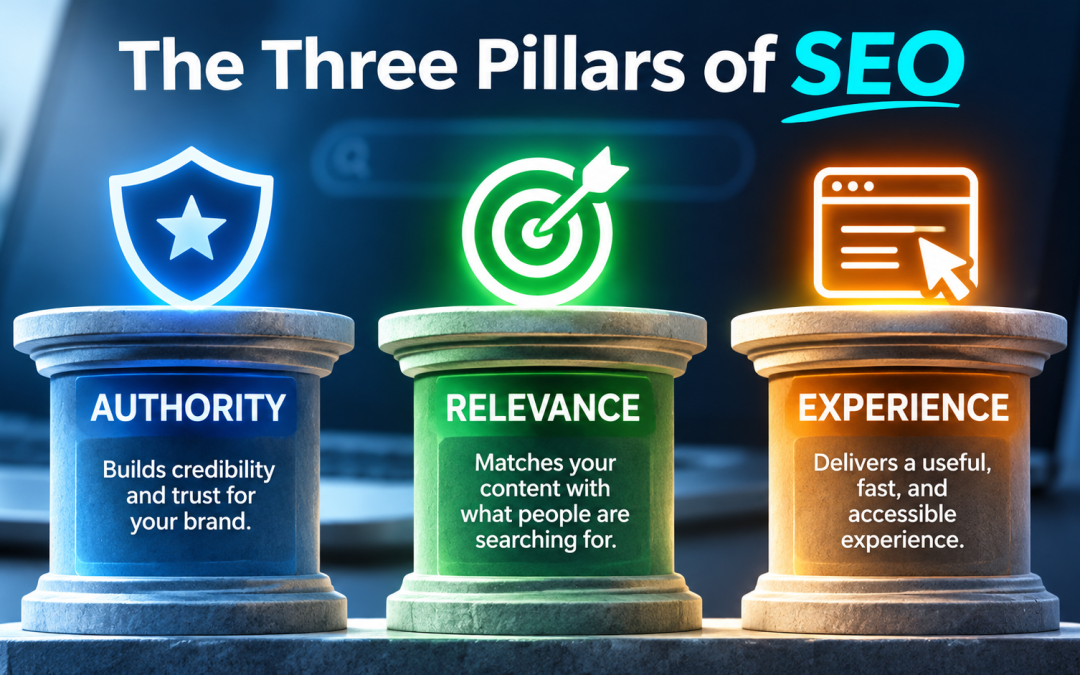
What are the three pillars of SEO?
The three foundational pillars of SEO are authority, relevance, and experience. Authority reflects a brand’s credibility and recognition, relevance shows how closely its content matches a searcher’s need, and experience describes how useful and accessible the interaction is. Brands serving customers in Canada can reinforce all three through their websites, clear answers, accurate profiles, educational content, and consistent public information.
How Does Authority Support SEO in Canada?
Authority concerns how clearly a brand demonstrates its expertise and establishes a credible presence. A website can support that impression by identifying the business, explaining its services accurately, and publishing content that shows a sound understanding of its field.
For a brand serving customers in Canada, information should also be consistent wherever people encounter it. A website, public profile, and educational video should describe the business and its services in ways that agree with one another. That consistency helps a potential customer recognize the same brand as they move between platforms.
Authority does not come from simply stating that a business is an expert. Useful explanations give readers a better basis for judging whether the business understands their questions. When a page explains a subject clearly and its supporting information is accurate, the brand’s expertise becomes easier to assess.
What Makes SEO Content Relevant to a Search?
Relevance describes how closely a page answers what someone is looking for. Using a search term in a heading can help identify the subject, but the content beneath that heading must address the question itself.
For example, someone searching for the three pillars of SEO needs to learn what authority, relevance, and experience mean. A page that mainly describes unrelated marketing services would give that reader less useful information, even if it repeats the phrase “pillars of SEO.”
Clear headings and direct opening answers make the purpose of a page easier to understand. Supporting sections can then explain each part of the answer in greater detail. A business can also consider whether different questions need separate pages. A person looking for a definition may need a different answer from someone comparing SEO services for a Canadian business.
Relevance starts with the searcher’s need and continues through the whole page. Each section should help answer the main question or a closely related follow-up.
Why Is Experience One of the Three SEO Pillars?
Experience is the quality of someone’s interaction with a brand’s information. After finding a page, can the visitor understand it, navigate it, and locate the details they need?
A useful experience includes readable language, descriptive headings, and a clear order of information. It also extends to accessibility and the accuracy of details presented on the website and public profiles. If a page promises an answer but makes it difficult to find, the interaction is less useful to the reader.
For a brand operating in Canada, experience should remain coherent across the places customers may encounter it. A profile can introduce the business, a video can explain a question, and a website page can provide more detail. Each should make the next piece of information understandable without forcing the customer to sort through conflicting descriptions.
Myth: Is Good Website Content Enough to Cover All Three Pillars?
A common myth is that publishing strong website content automatically addresses authority, relevance, and experience. Content is central to SEO, but its usefulness depends on what it says, how it is presented, and whether the brand’s other public information supports it.
An article might answer a question well but be difficult to navigate. A polished website might be easy to use while leaving common customer questions unanswered. A clear page may also sit alongside profiles that describe the business differently. Looking at all three pillars helps identify these gaps.
How Do Authority, Relevance, and Experience Work Together?
The pillars are most useful when applied to the same customer question. A relevant page provides a direct answer. Clear organization makes that answer easy to use. Accurate, consistent information about the business helps readers understand who provided it.
This approach gives brands in Canada a practical way to review their online presence. They can assess whether their content responds to real questions, whether visitors can use it comfortably, and whether the brand presents a coherent picture across its public channels.
FAQ
Are the three pillars separate SEO tasks?
They describe different qualities, but they work together. A credible page is more useful when it answers the right question and makes the answer easy to understand.
Does authority mean a business needs to claim it is an expert?
No. Clear explanations, accurate business information, and consistent educational content give readers a better way to assess a brand’s knowledge.
Can one page answer several related search questions?
Yes, when the questions fit the same topic. Each answer should remain easy to find, and the page should stay focused on its main purpose.
Does experience apply outside a website?
Yes. Public profiles, videos, and other content also shape how easily people can understand a brand and find useful information.
What are the three pillars of SEO?
The three foundational pillars of SEO are authority, relevance, and experience. Authority reflects credibility and recognition, relevance shows how closely content matches a searcher’s need, and experience covers how useful and accessible the interaction is. For brands serving customers in Canada, these pillars should be reinforced through strong website SEO, clear answers, accurate profiles, educational content, and consistent public information.
Conclusion
Authority, relevance, and experience help explain whether SEO content is credible, responsive to a searcher’s question, and useful to interact with. Brands serving Canada can strengthen these qualities through clear website content and consistent information across their public channels.